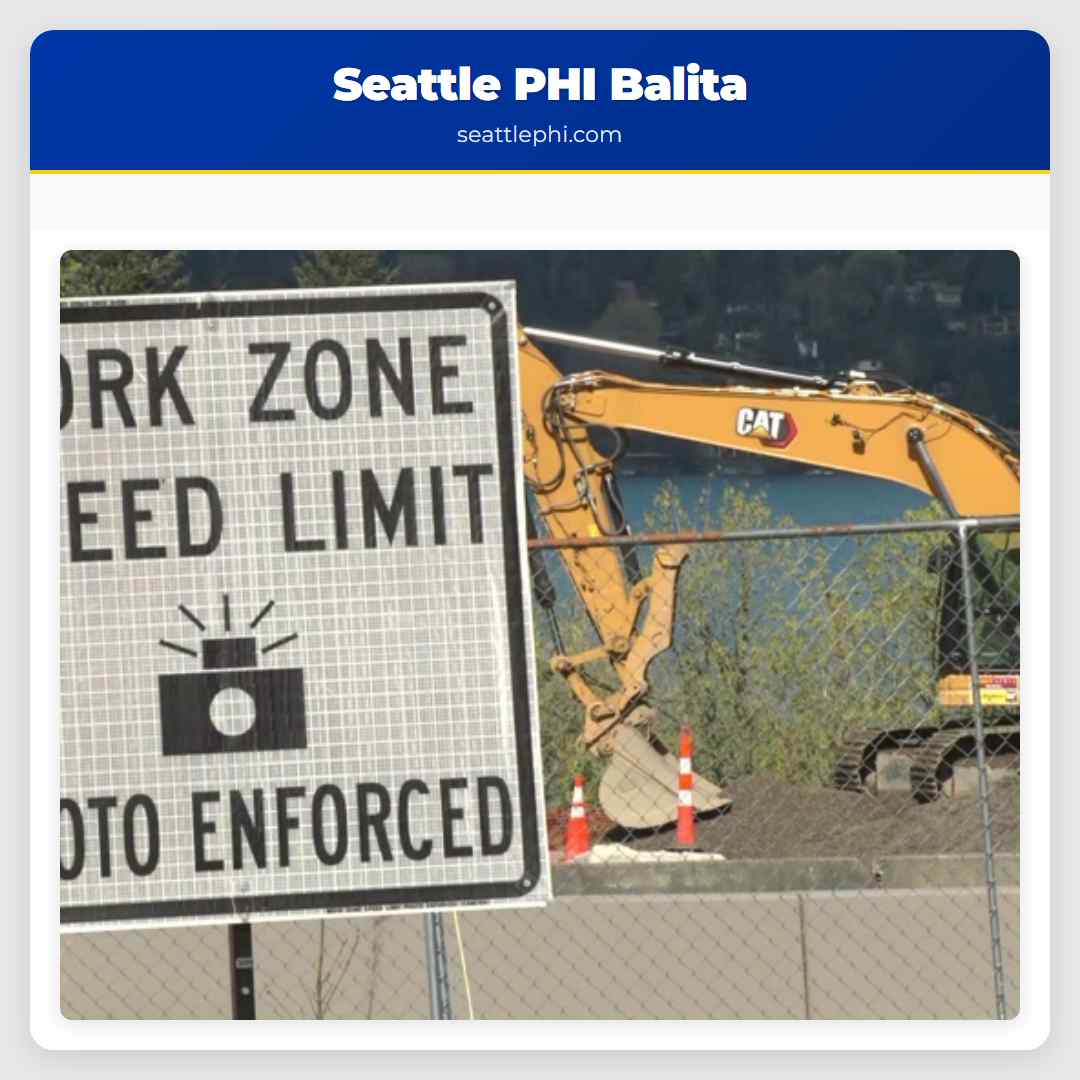
SEATTLE – One year after launching the Work Zone Speed Camera Program, Washington state officials are marking the milestone with an update on infractions issued and a reminder about new penalties set to take effect later this year.
The Washington State Department of Transportation and the Washington State Patrol say the program, which began enforcement April 16, 2025, on Interstate 5 near Joint Base Lewis-McChord, aims to reduce speeding in active construction, maintenance and emergency zones.
In its first year, the program expanded from a single camera to six cameras rotating through work zones across Western Washington and was used in more than 675 deployments at 46 job sites. Officials say the second year will bring additional cameras, with plans to expand coverage into Central and Eastern Washington and grow to as many as 15 cameras by 2027.
Early data shows a reduction in speeding in areas where cameras were deployed.
“When we initiated the camera program, they were logging about 60% of the traffic exceeding the work zone speed limits while we had folks working on the ground [on I-5 near JBLM]. After we deployed the cameras, that number dropped to about 30%. That’s a pretty good indicator that the cameras are making a pretty big dent,” said WSDOT Deputy Secretary Mike Gribner.
Since launching, troopers have issued 65,000 infractions. Of those, 59,000 were first-time violations that did not carry a financial penalty. Officials say the program is focused on changing driver behavior, not generating revenue.
That will change starting July 1, 2026, when a first infraction will result in a $125 fine. Second and subsequent violations will remain $248.
“So far, nearly 9% of the infractions we see are repeat offenders,” said Washington State Patrol Chief John Batiste. “That’s close to 6,000 people who have not only received the fine, but who hopefully have heard the message: slow down in our work zones, it will save lives.”
For each potential violation, a Washington State Patrol trooper reviews images and data captured by the cameras. If a violation is confirmed, a notice of infraction is mailed to the registered owner of the vehicle within 30 days. Infractions are considered nonmoving violations and do not affect driving records or insurance, though unpaid fines can be added to vehicle registration renewals.
Questions about privacy and data use have also emerged as the program expands, though state officials outlined several safeguards.
Washington State Patrol Lt. Nick Jennings said cameras are triggered when a driver is over the posted work zone speed limit. At that point, images are captured and reviewed through multiple verification steps before a citation is issued, including confirming the vehicle, location and that workers were present.
Officials said access to the data is tightly restricted. Only State Patrol personnel and authorized program staff can view the images, and each infraction is reviewed individually by troopers before it is approved.
Jennings said additional protections are built into the system. Faces of drivers and passengers are blurred, and certain identifying data is hidden. The images are stored in a vendor-managed database but can only be accessed by those running the program.
State officials also said the data cannot be used for other law enforcement purposes. Jennings said requests from other agencies – including in serious cases – have been denied. “We can’t use that data for any other purpose,” he said, noting it is limited strictly to work zone speeding enforcement.
Officials said that if a data breach is suspected, the program would be shut down until the issue is resolved. They added that cameras are active only when work crews are present at job sites.
Preliminary data shows 1,557 work zone-related collisions in 2025, a slight decrease from the previous year, though fatal collisions increased from seven to nine. The leading causes were following too closely, speeding and distracted driving.
“We’re very excited about being able to integrate these camera systems into our work zones,” said Tyler Anderson, a WSDOT maintenance supervisor. “I was personally struck in a work zone twice. It’s definitely a scary experience when you see that coming and your body tenses up before the impact.”
Transportation leaders are urging drivers to slow down, especially as April marks a statewide work zone safety campaign and National Work Zone Awareness Week.
ibahagi sa twitter: Washington state to impose fines in work zones starting July as speed camera program expands